Beyond Trust: Open Path
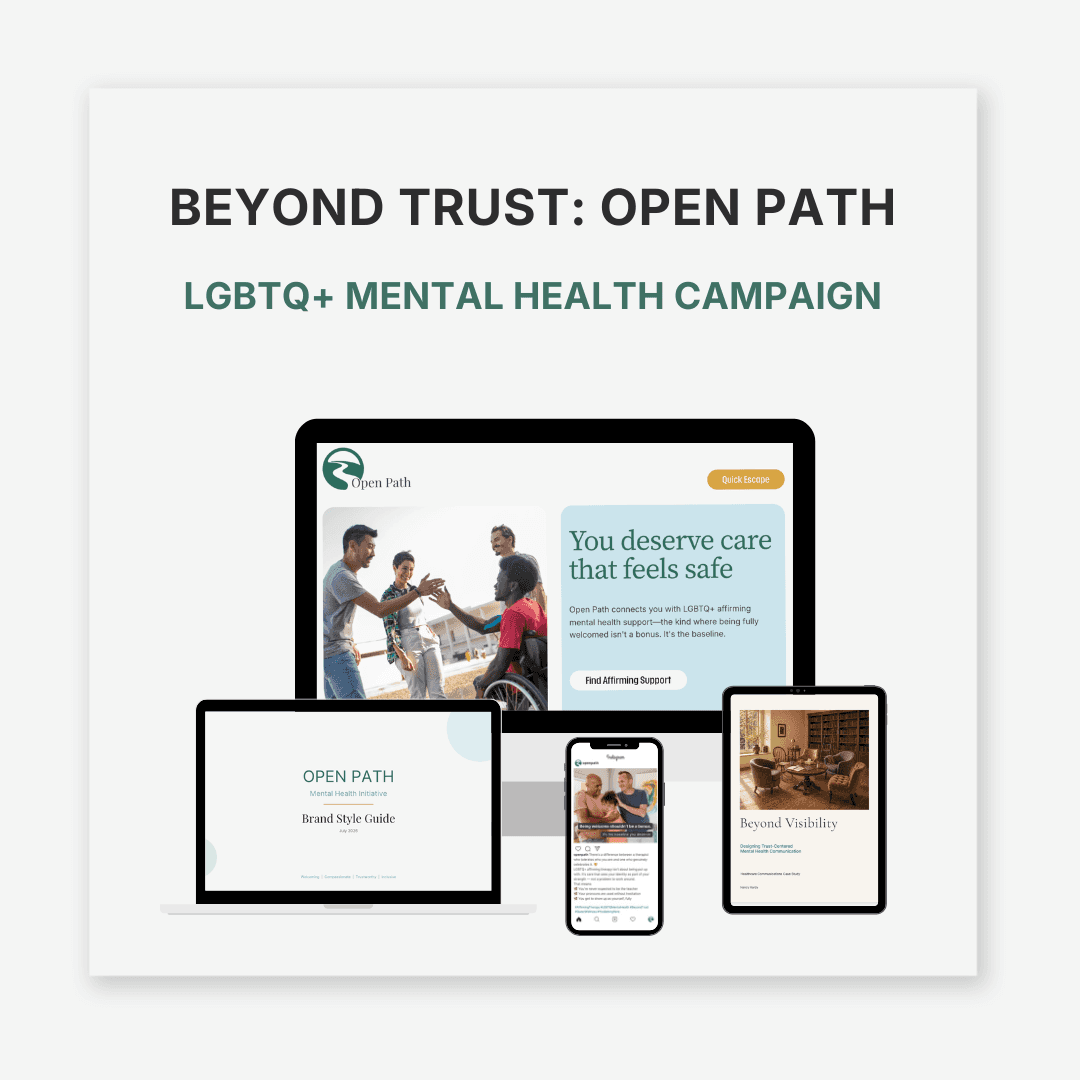
An integrated healthcare communications campaign designed from graduate research on LGBTQ+ mental health communication. The project includes a website, research publication, email nurture sequence, a blog series, social media posts, short-form video, and a content calendar designed to build trust and connect people with affirming mental health resources.
01 — The Challenge
LGBTQ+ individuals often face uncertainty when seeking mental health support, from concerns about privacy and discrimination to the challenge of finding affirming providers. This project asked a simple question: How can communication build trust before someone ever reaches out for help? The result was a campaign designed to reduce barriers and create a safer, more welcoming path to care.
02 — Research Insights
Interviews revealed that trust begins long before someone schedules an appointment. Participants consistently emphasized the importance of privacy, affirming language, authentic representation, and the ability to explore resources without pressure. These insights shaped every aspect of the campaign, from messaging and website content to email, social media, and visual design.
03 — Campaign Strategy
The campaign focused on meeting people where they are: providing clear, supportive information at every stage of the help-seeking journey. Each touch point served a distinct purpose, from building awareness through social media and blog content to strengthening trust through the website, publication, and email sequence. Together, the campaign created a consistent, welcoming experience that encouraged users to explore care at their own pace.
04 — Visual Identity
The visual identity was designed to reflect the campaign's core values of trust, safety, and inclusivity. A restrained color palette, approachable typography, and authentic photography create a calm, welcoming experience that supports the messaging without overwhelming it. Every design choice reinforces the campaign's goal of making mental health information feel accessible, respectful, and affirming.
05 — Campaign Deliverables
The visual identity was designed to reflect the campaign's core values of trust, safety, and inclusivity. A restrained color palette, approachable typography, and authentic photography create a calm, welcoming experience that supports the messaging without overwhelming it. Every design choice reinforces the campaign's goal of making mental health information feel accessible, respectful, and affirming.
Visual Identity & Brand Guidelines
To create a consistent experience across every touch point, a brand guide established the campaign's visual identity, messaging principles, typography, color palette, and photography direction. These guidelines ensured that the website, publication, Resource Library, email campaign, and social media assets communicate with a unified voice.
Landing Page Experience
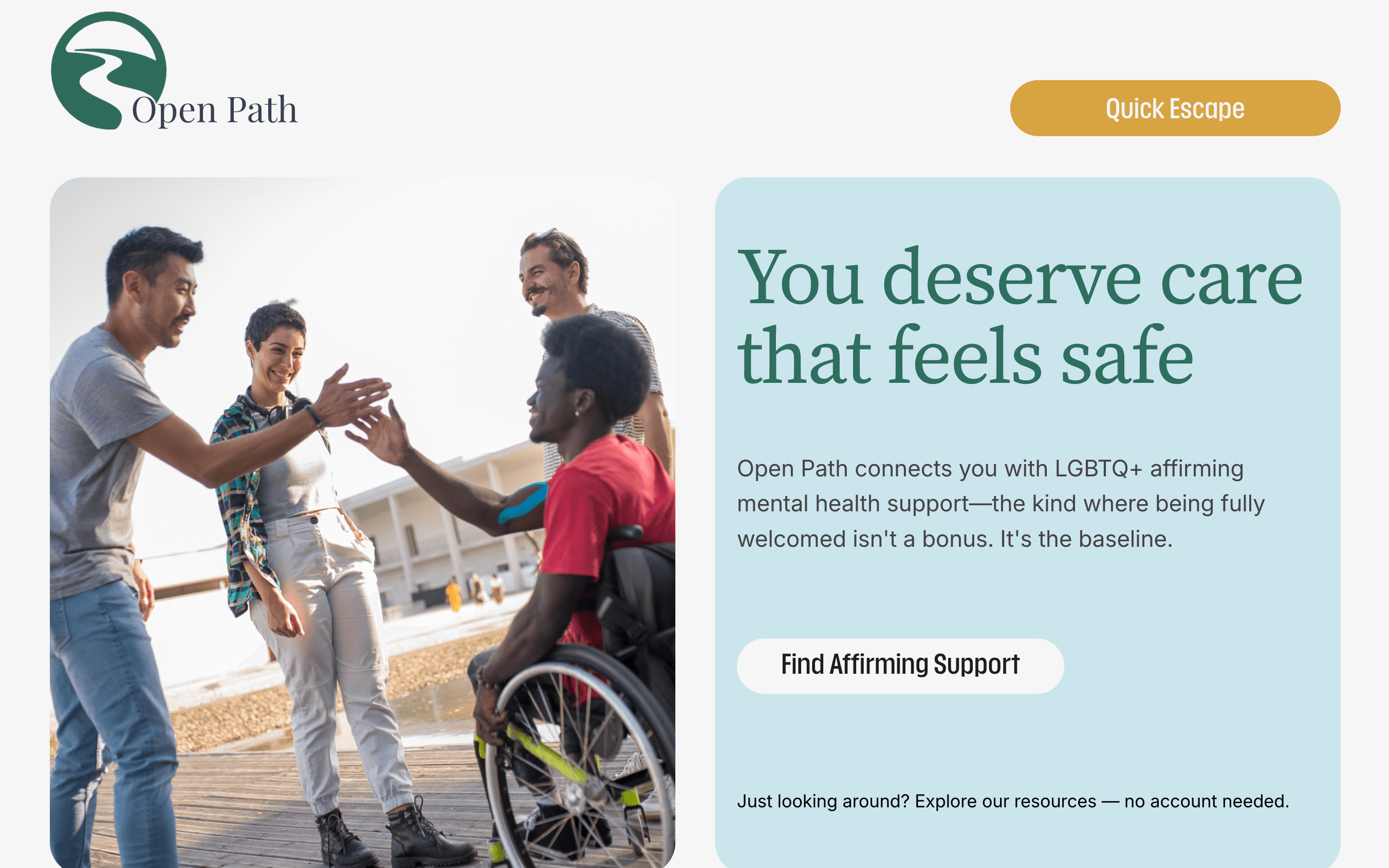
The landing page was designed to make seeking support feel safe from the first click. Clear messaging, accessible navigation, and a discreet Quick Escape feature help visitors explore affirming mental health resources with greater privacy and confidence, reinforcing the campaign's commitment to trust at every step.
Research Publication
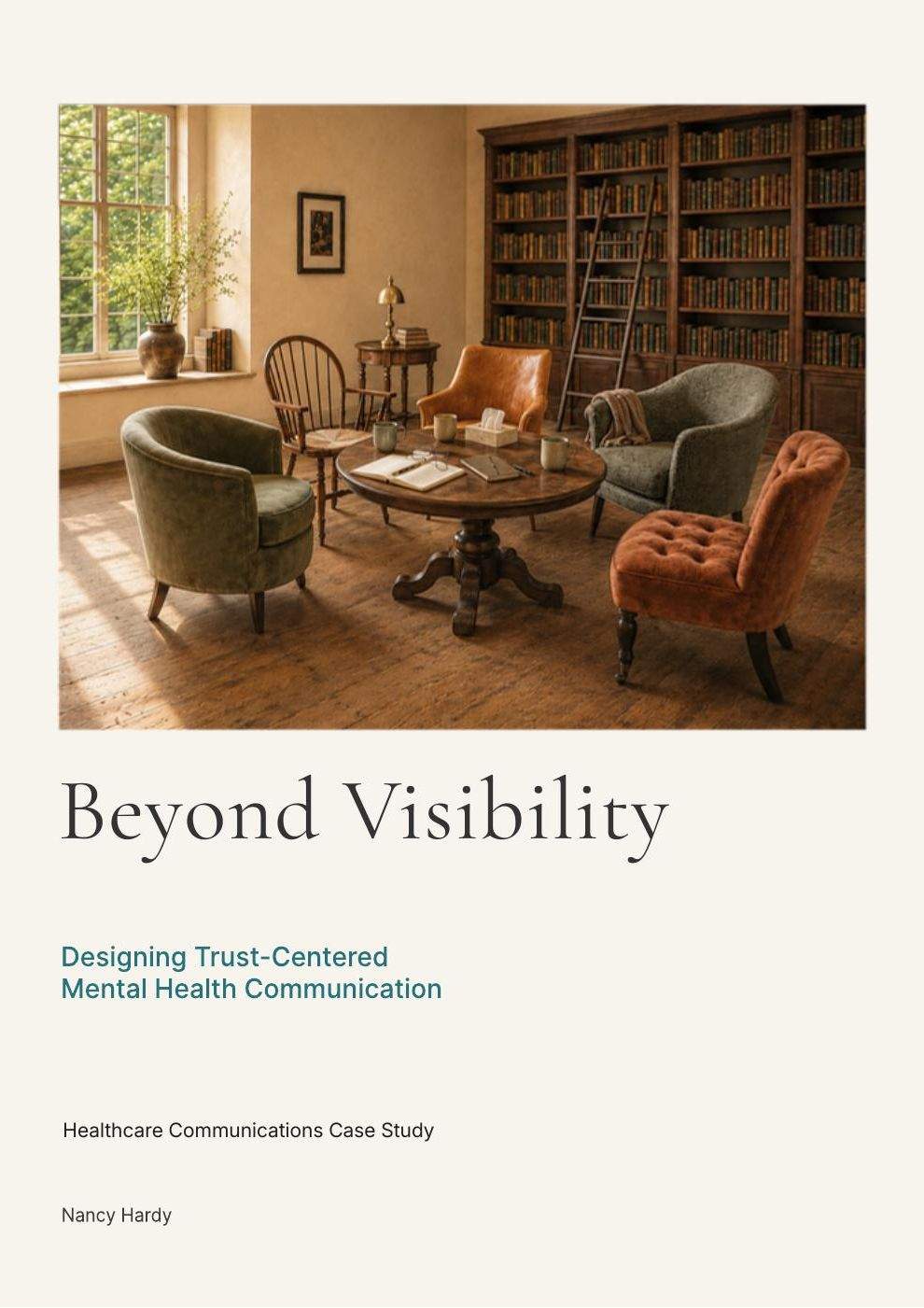
The publication transforms qualitative research into an accessible narrative, combining participant insights, campaign strategy, and visual storytelling. Designed to inform and engage, it serves as the campaign's foundation and demonstrates how research can be translated into meaningful communication.
Email Campaign
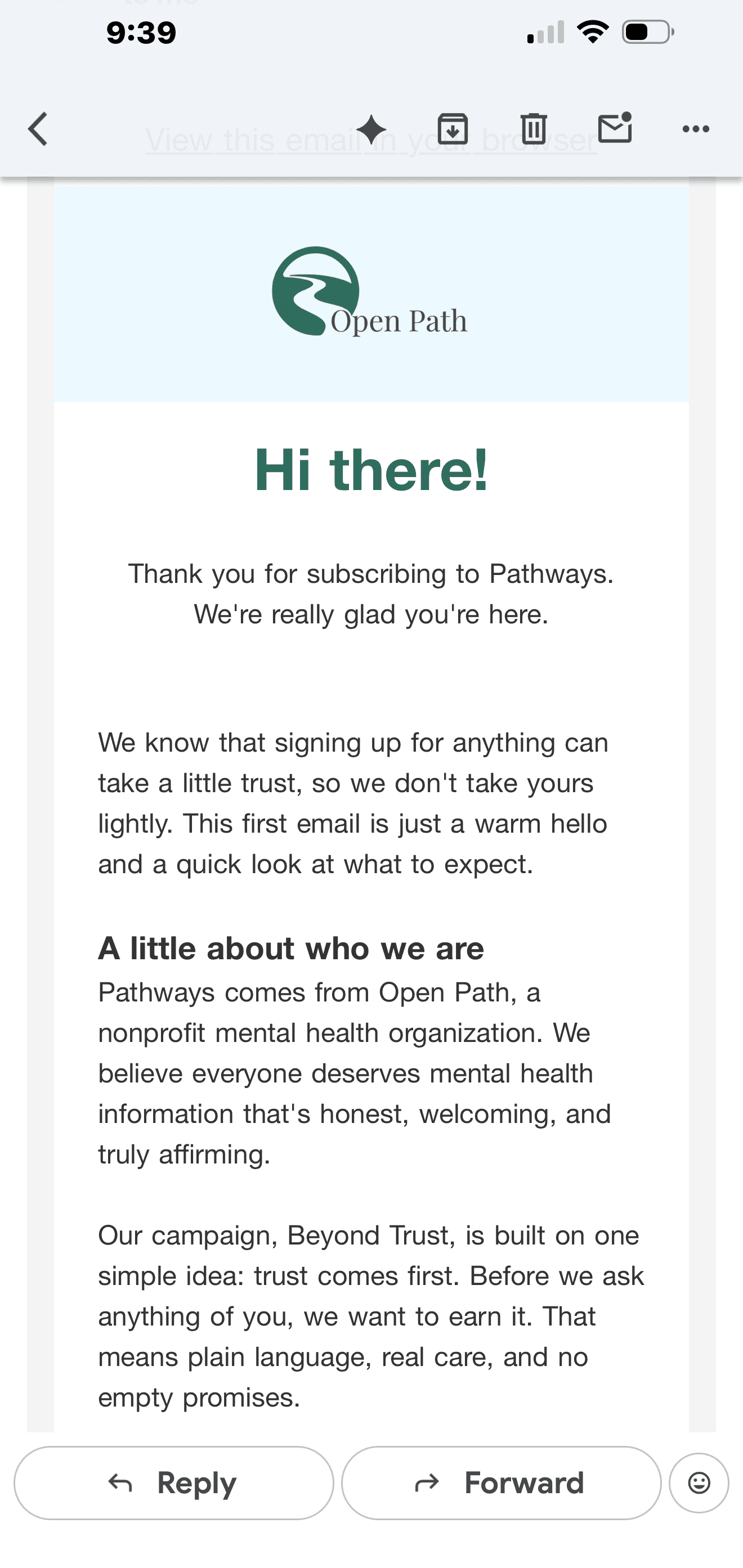
The three-part email series nurtures trust over time, delivering supportive resources, practical guidance, and encouragement at each stage of the help-seeking journey. Every message reinforces the campaign's commitment to clear, compassionate, and affirming communication.
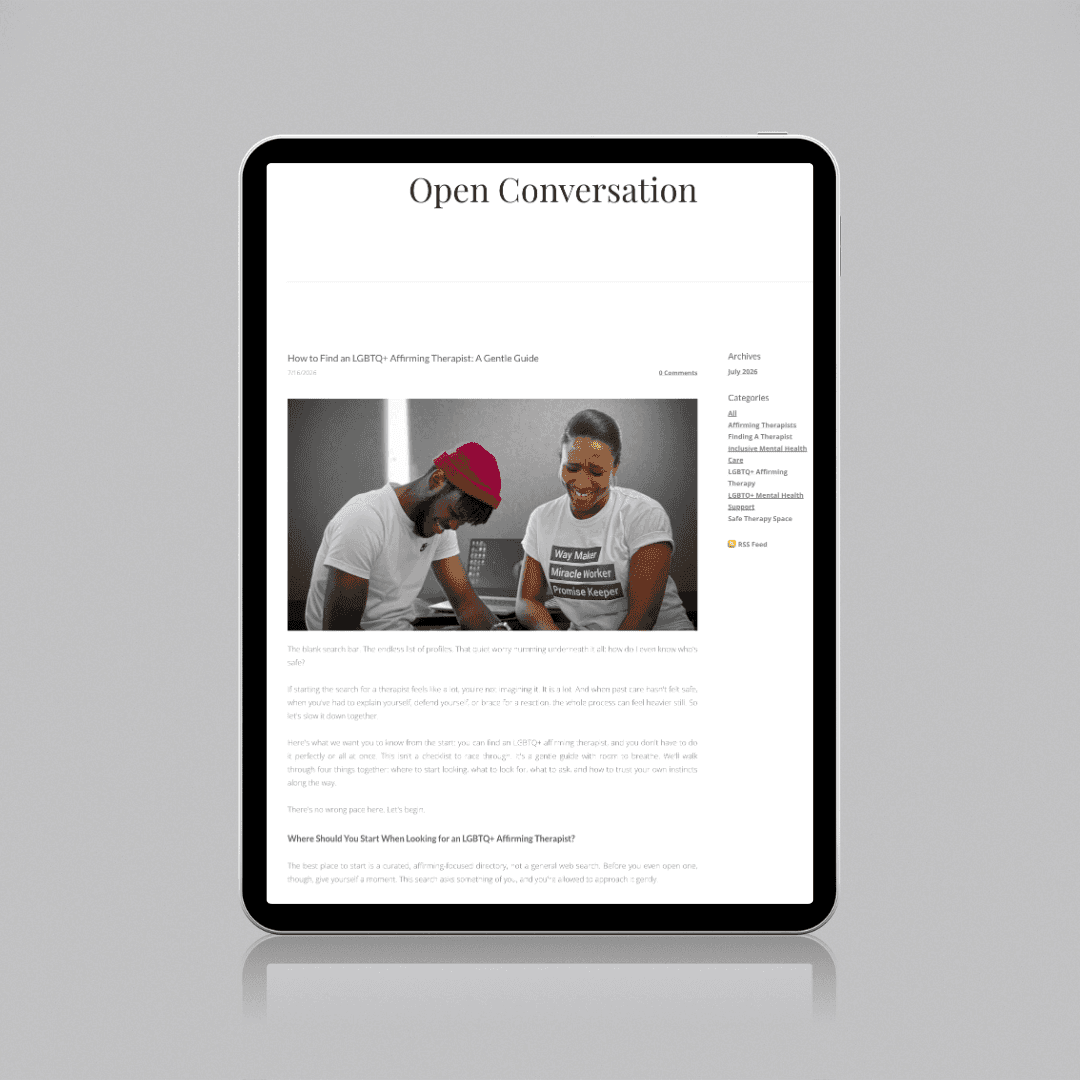
Blog Series
The blog posts are designed to be part of Open Path's Resource Library, extending the campaign beyond awareness by providing practical, affirming content that helps users navigate their mental health journey. Each article is designed to build trust, answer common questions, and empower readers to seek support with confidence.
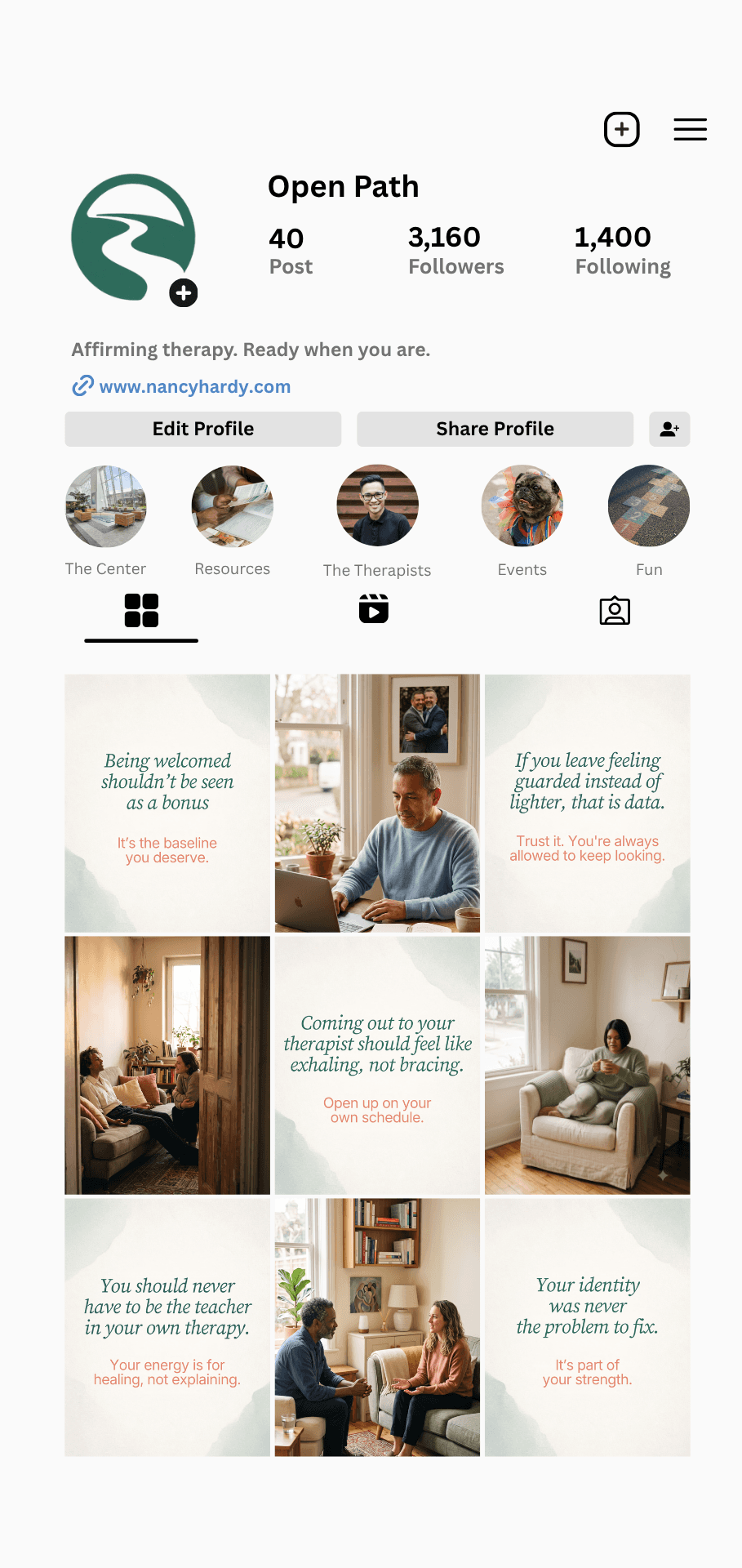
Social Media Posts
The Instagram campaign extends Open Path's message through supportive, shareable content that encourages reflection, reduces stigma, and reinforces trust. A consistent visual identity and compassionate messaging help create an engaging social presence that meets audiences where they already spend their time.
Video: What Affirming Care Looks Like
This short-form video brings the campaign's core message to life through authentic storytelling and compassionate visuals. Designed for social media, it introduces the concept of affirming mental healthcare in a way that is approachable, relatable, and encourages viewers to take the next step toward support.
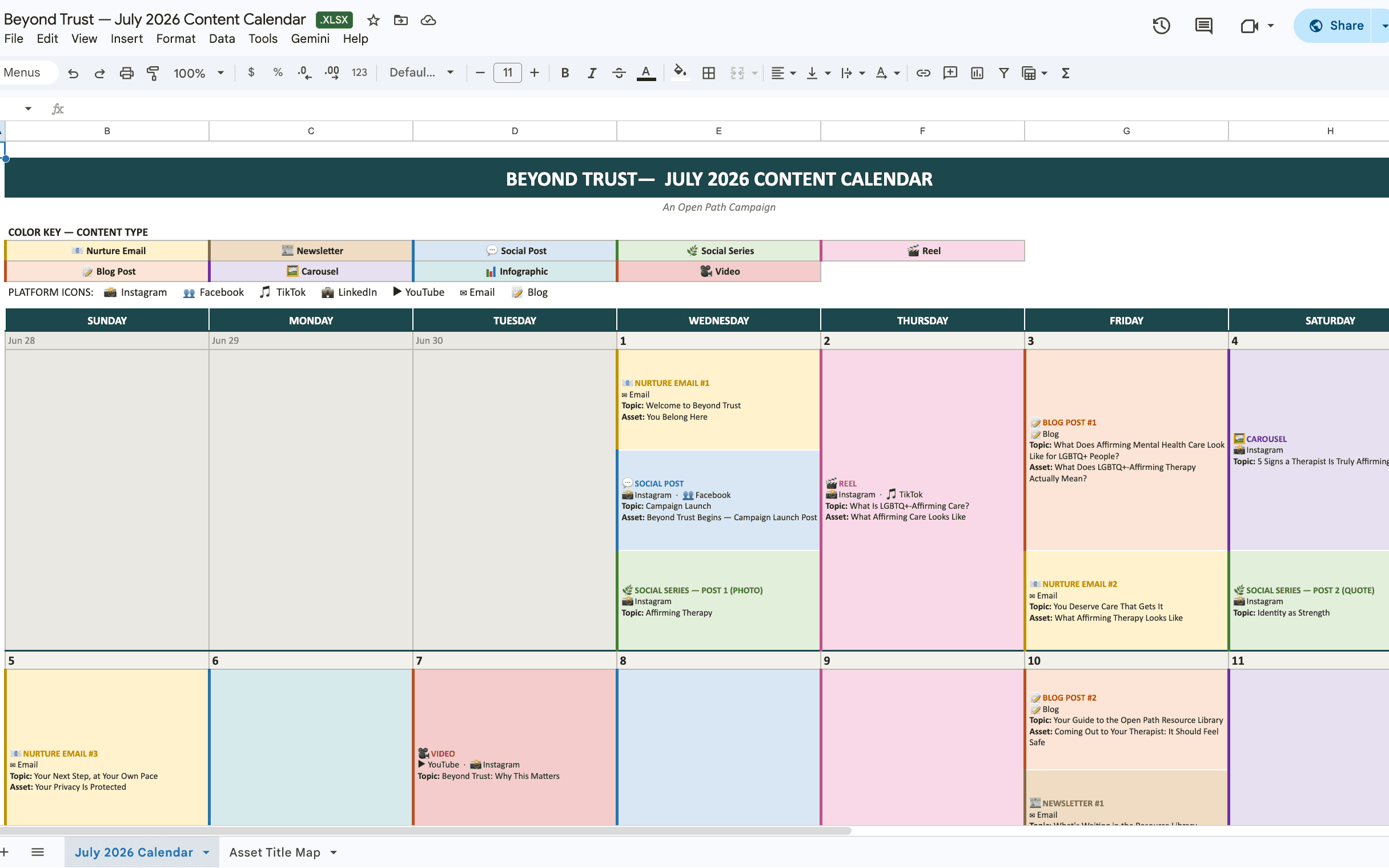
Content Calendar
The content calendar demonstrates how research-informed messaging is planned and delivered across multiple channels. By coordinating social media, blog content, email, and website updates, it ensures every touchpoint works together to create a cohesive, trust-centered campaign.
Final Thoughts
This project reinforced a lesson that extends beyond healthcare communications: trust isn't built through polished campaigns alone. It begins by listening, understanding lived experiences, and creating communication that helps people feel seen before they're ever asked to take the next step.
Developing Open Path challenged me to think beyond individual deliverables and design a complete communications ecosystem. Every touchpoint—from the publication and website to the Resource Library, email series, social media, and video—was created to serve a purpose within a larger strategy. Rather than asking how to promote a service, I focused on how communication could reduce uncertainty, foster belonging, and help people navigate mental healthcare with greater confidence.
More than anything, this project reminded me that effective communication begins with empathy. Research provided the evidence, but listening gave it meaning. The conversations behind this campaign shaped every design decision, every message, and every interaction. They reinforced my belief that the strongest communication strategies don't simply inform. Instead, they build trust, create connection, and reflect the experiences of the people they are intended to serve.